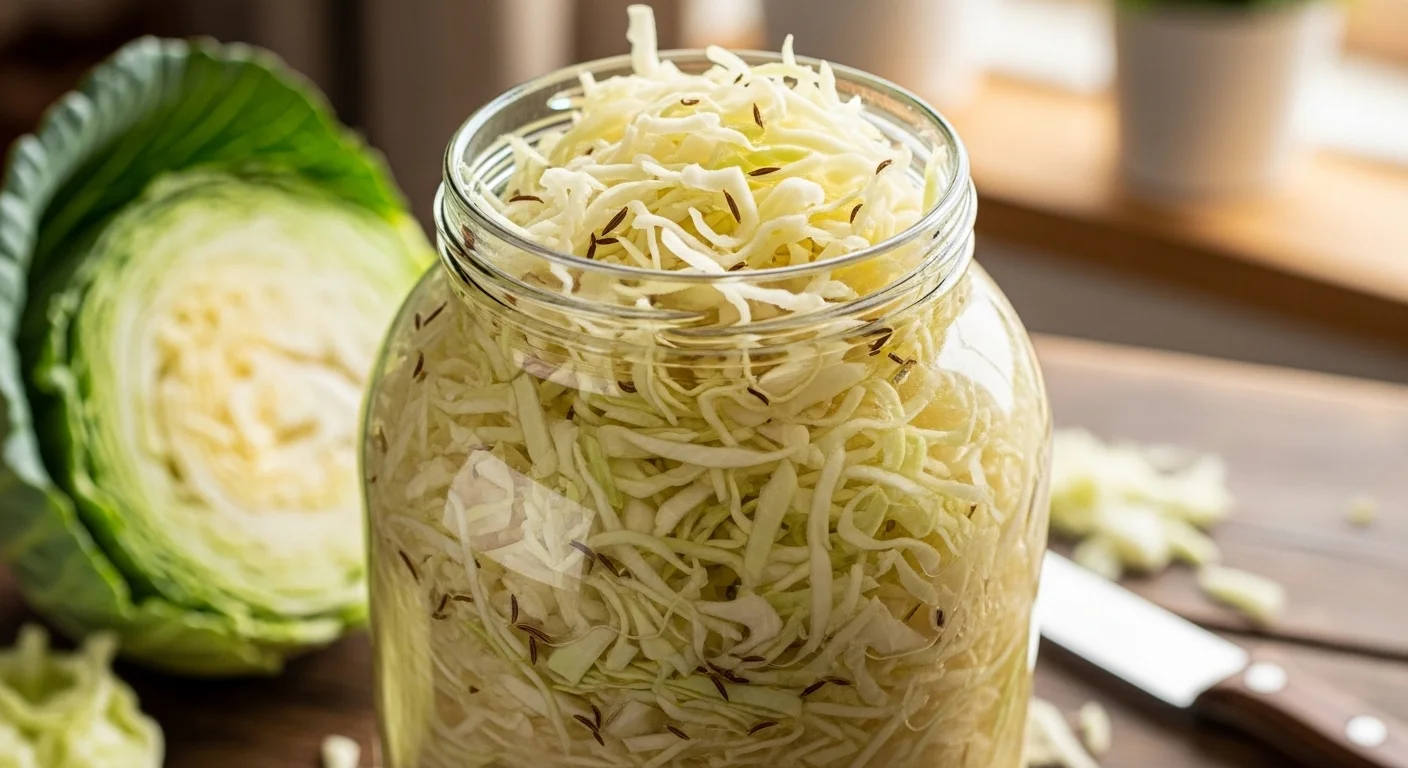
Bubbies Sauerkraut Recipe
So you looked at a jar of Bubbies sauerkraut and thought, “Wait… It’s just cabbage and salt?” Yep. That’s the magic. No vinegar. No weird stuff. Just crunchy, tangy, naturally fermented goodness doing its probiotic thing.
And guess what? You can absolutely make it at home. It takes patience, sure—but the process is weirdly satisfying. You massage cabbage, let it sit, and somehow it transforms into tangy perfection. Science? Magic? Both.
Bubbies Sauerkraut Recipe
Ingredients
- Green cabbage – fresh firm, and heavy for its size
- Fine sea salt – non-iodized important!
- Caraway seeds – classic slightly nutty vibe
- Garlic cloves – subtle kick
- Black peppercorns – tiny flavor bombs
Instructions
- Slice the cabbage thinly.
- Remove the outer leaves and core. Slice into thin ribbons.
- Keep one clean outer leaf aside—you’ll need it later.
- Weigh your cabbage.
- Use about 2% salt by weight (roughly 1 tablespoon per 1½ pounds of cabbage).
- Precision helps fermentation stay safe and balanced.
- Massage the salt into the cabbage.
- Yes, massage it. Get in there.
- After 5–10 minutes, the cabbage softens and releases liquid. That brine is gold.
- Pack it tightly into a clean jar.
- Press firmly with your fist or a spoon.
- The liquid should rise above the cabbage.
- Use the reserved cabbage leaf as a cap.
- Place it on top and push everything down so all cabbage stays submerged.
- Submerged = safe. Exposed = risky.
- Cover loosely.
- Use a fermentation lid or a loosely screwed lid.
- Gas needs to escape. Trust the bubbles.
- Let it ferment at room temperature.
- Store out of direct sunlight.
- Taste after 3–5 days. For deeper flavor, ferment 2–3 weeks.
- Move to the fridge once you love the flavor.
- Cold slows fermentation and locks in taste.
Why This Recipe Is Awesome
Let me hype this up properly:
- Two ingredients. That’s it. No complicated shopping list.
- Naturally fermented. Hello, gut-friendly probiotics.
- Crunchy and fresh. None of that soggy, vinegary stuff.
- Budget-friendly. Cabbage is cheap. Like, shockingly cheap.
It’s basically fermentation for beginners. If you can salt cabbage and wait, you can make sauerkraut. Even I didn’t mess it up.
Ingredients You’ll Need
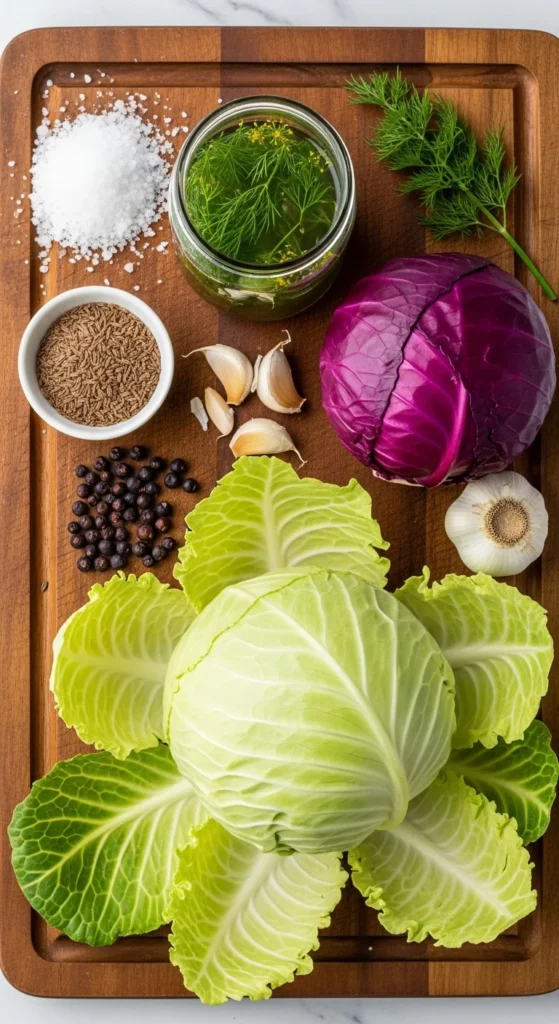
- Green cabbage – fresh, firm, and heavy for its size
- Fine sea salt – non-iodized (important!)
Optional but fun extras:
- Caraway seeds – classic, slightly nutty vibe
- Garlic cloves – subtle kick
- Black peppercorns – tiny flavor bombs
But the OG Bubbies-style version? Just cabbage and salt.
Step-by-Step Instructions
- Slice the cabbage thinly.
Remove the outer leaves and core. Slice into thin ribbons.
Keep one clean outer leaf aside—you’ll need it later. - Weigh your cabbage.
Use about 2% salt by weight (roughly 1 tablespoon per 1½ pounds of cabbage).
Precision helps fermentation stay safe and balanced. - Massage the salt into the cabbage.
Yes, massage it. Get in there.
After 5–10 minutes, the cabbage softens and releases liquid. That brine is gold. - Pack it tightly into a clean jar.
Press firmly with your fist or a spoon.
The liquid should rise above the cabbage. - Use the reserved cabbage leaf as a cap.
Place it on top and push everything down so all cabbage stays submerged.
Submerged = safe. Exposed = risky. - Cover loosely.
Use a fermentation lid or a loosely screwed lid.
Gas needs to escape. Trust the bubbles. - Let it ferment at room temperature.
Store out of direct sunlight.
Taste after 3–5 days. For deeper flavor, ferment 2–3 weeks. - Move to the fridge once you love the flavor.
Cold slows fermentation and locks in taste.
That’s it. No vinegar. No cooking. Just patience.
How to Serve
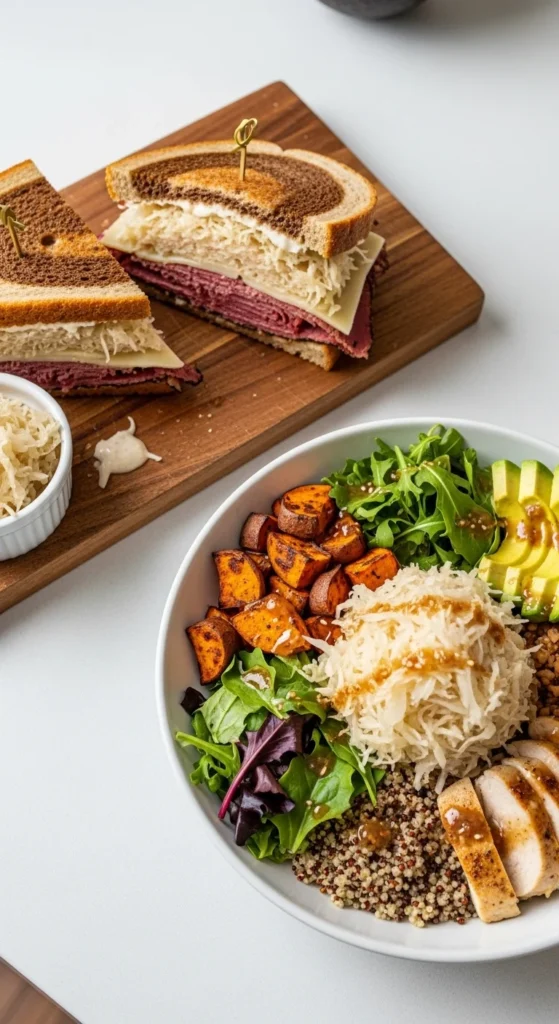
Oh, you have options:
- On sandwiches for crunch and tang
- Tossed into salads
- Paired with roasted vegetables
- Added to grain bowls
- Eaten straight from the jar (no shame)
Pro tip: Don’t cook it if you want probiotics. Heat kills the beneficial bacteria. Keep it raw and fresh.
Nutrition Facts
Approximate per ½ cup serving:
- Calories: 15–20
- Carbohydrates: 4g
- Fiber: 2g
- Fat: 0g
- Protein: 1g
- Vitamin C: High
- Probiotics: Naturally occurring (raw version only)
Low-calorie, high-flavor, gut-friendly goodness.
Common Mistakes to Avoid
- Using iodized table salt. It can mess with fermentation. Use sea salt.
- Not packing tightly enough. Air pockets = mold risk.
- Letting cabbage float above brine. Submerge everything. Seriously.
- Panicking over bubbles. Bubbles mean fermentation is working. Relax.
- Opening the jar every hour. It’s not a suspense movie. Give it time.
If you see mold (fuzzy, colorful growth), toss it. But white cloudy brine? Totally normal.
Alternatives & Substitutions
- Red cabbage: Same process, prettier color.
- Add grated carrot: Slight sweetness and extra crunch.
- Spice it up: Add chili flakes for heat.
- Ginger twist: Thin slices add subtle zing.
- No scale? Use 1 tablespoon salt per 1½ pounds cabbage as a rough guide.
IMO, the classic version wins for that authentic Bubbies vibe—but experimenting is half the fun.
Final Thoughts
Making sauerkraut at home feels oddly empowering. You take humble cabbage, add salt, wait a bit—and boom. You’ve got tangy, probiotic-rich magic sitting in your fridge.
It’s simple, budget-friendly, and surprisingly addictive. Plus, there’s something deeply satisfying about saying, “Oh this? I fermented it myself.”
Now go grab a cabbage and start massaging. Your gut—and your taste buds—will thank you.
FAQ (Frequently Asked Questions)
Do I really only need cabbage and salt?
Yes. That’s the beauty of it. Simplicity wins.
How do I know it’s fermenting properly?
You’ll see bubbles and smell a tangy aroma. That’s good bacteria doing their thing.
Can I use table salt?
Technically yes, but iodized salt can interfere. Why risk it?
How long should I ferment it?
3–5 days for mild flavor. 2–3 weeks for bold tang. Taste as you go.
What if the brine doesn’t cover the cabbage?
Press it down more. If needed, add a little salted water (1 tsp salt per cup water).
Is cloudy brine bad?
Nope. Cloudy is normal. Fuzzy mold? Not normal.
Do I need a fancy fermentation kit?
Nope. A clean jar works fine. Fancy lids just make life easier. FYI, simple works.