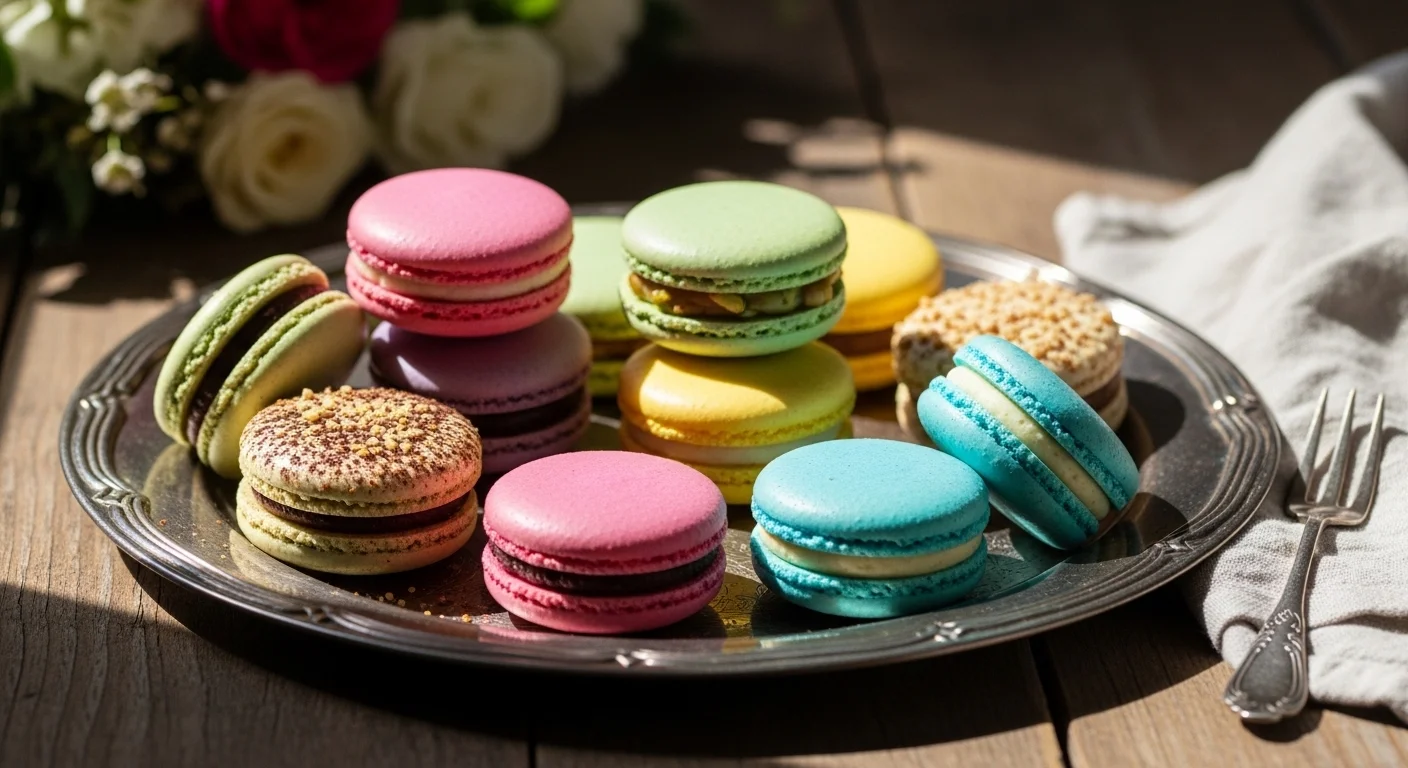
French Buttercream Macarons
So you want to make macarons. Yes, those delicate, colorful little French cookies that look like they belong in a pastry boutique and not your kitchen.
And yes, you’re terrified. Totally normal.
But here’s the deal: these French buttercream macarons are easier than you think (if you follow the rules) and worth every second of effort. They’re sweet, creamy, slightly crunchy on the outside, and melt-in-your-mouth perfection on the inside. Basically, adult happiness in sandwich form.

French Buttercream Macarons
Ingredients
- Almond flour – the base of your cookie dreams
- Powdered sugar – makes it sweet and smooth
- Egg whites – the magic ingredient
- Granulated sugar – helps stabilize the meringue
- Cream of tartar – optional but gives extra structure
- Food coloring – totally optional but fun
- Unsalted butter – softened not melted
- Powdered sugar – sweetness hero
- Vanilla extract – classic flavor
- Milk or cream – optional for perfect consistency
Instructions
- Prep your oven and baking sheets.
- Preheat to 300°F (150°C). Line baking sheets with parchment paper. No oven? No cookies. Trust me.
- Sift almond flour and powdered sugar together.
- No clumps allowed. Macarons are picky, but in a cute way.
- Beat egg whites until foamy. Gradually add granulated sugar (and cream of tartar if using) until stiff peaks form.
- Pro tip: stiff peaks = your meringue can hold its ground.
- Fold almond-sugar mixture into meringue.
- Use gentle, deliberate folding. You want a smooth, ribbon-like batter. Overmix? Disaster.
- Pipe onto prepared baking sheets in small, even circles.
- Tap the tray lightly to release air bubbles. This step = smoother shells.
- Let macarons rest for 30–60 minutes until they form a slight skin.
- Touch lightly—no sticking? Ready to bake.
- Bake for 15–18 minutes, rotating sheets halfway.
- Watch the oven, because perfection is close but fragile.
- Cool completely before removing from parchment.
- Patience is key. Don’t skip this.
- Make the French buttercream:
- Beat softened butter until fluffy. Gradually add powdered sugar. Add vanilla and a splash of milk for smooth consistency.
- Pipe or spread buttercream onto the flat side of one shell and sandwich with another.
- Voilà! Your French buttercream macarons are alive.
Why This Recipe Is Awesome
Let’s be real—macarons have a reputation for being fussy. But this recipe?
Totally doable, even for mere mortals.
- It’s predictable, if you follow the steps. No mysterious “fold until you feel the vibe” nonsense.
- French buttercream filling is smooth, buttery, and not overly sweet—so your macarons taste like fancy French magic, not sugar bricks.
- Plus, they look impressive. You might even consider giving yourself a tiny bow when presenting them.
Ingredients You’ll Need
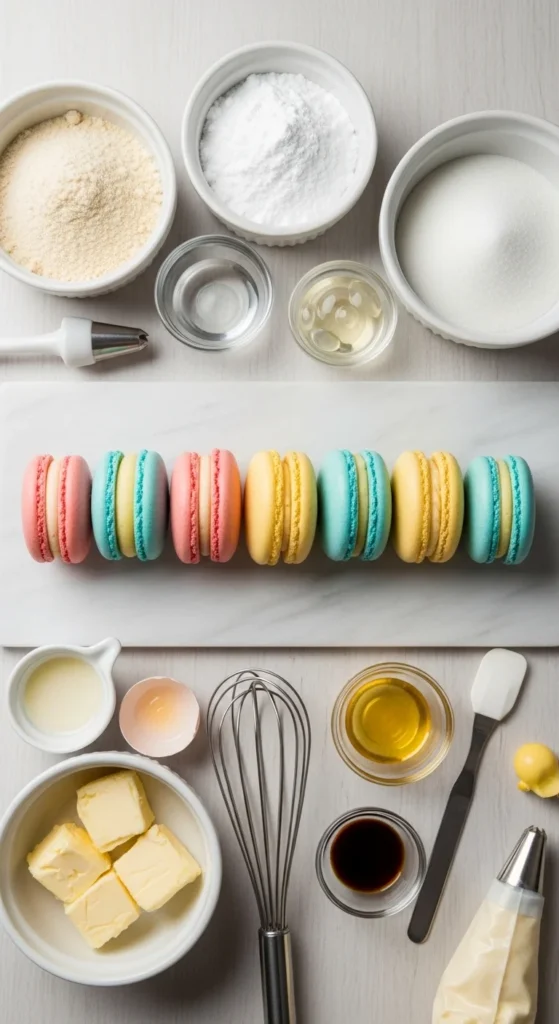
For the Macaron Shells:
- Almond flour – the base of your cookie dreams
- Powdered sugar – makes it sweet and smooth
- Egg whites – the magic ingredient
- Granulated sugar – helps stabilize the meringue
- Cream of tartar – optional, but gives extra structure
- Food coloring – totally optional, but fun
For the French Buttercream Filling:
- Unsalted butter – softened, not melted
- Powdered sugar – sweetness hero
- Vanilla extract – classic flavor
- Milk or cream – optional, for perfect consistency
Step-by-Step Instructions
- Prep your oven and baking sheets.
Preheat to 300°F (150°C). Line baking sheets with parchment paper. No oven? No cookies. Trust me. - Sift almond flour and powdered sugar together.
No clumps allowed. Macarons are picky, but in a cute way. - Beat egg whites until foamy. Gradually add granulated sugar (and cream of tartar if using) until stiff peaks form.
Pro tip: stiff peaks = your meringue can hold its ground. - Fold almond-sugar mixture into meringue.
Use gentle, deliberate folding. You want a smooth, ribbon-like batter. Overmix? Disaster. - Pipe onto prepared baking sheets in small, even circles.
Tap the tray lightly to release air bubbles. This step = smoother shells. - Let macarons rest for 30–60 minutes until they form a slight skin.
Touch lightly—no sticking? Ready to bake. - Bake for 15–18 minutes, rotating sheets halfway.
Watch the oven, because perfection is close but fragile. - Cool completely before removing from parchment.
Patience is key. Don’t skip this. - Make the French buttercream:
Beat softened butter until fluffy. Gradually add powdered sugar. Add vanilla and a splash of milk for smooth consistency. - Pipe or spread buttercream onto the flat side of one shell and sandwich with another.
Voilà! Your French buttercream macarons are alive.
How to Serve
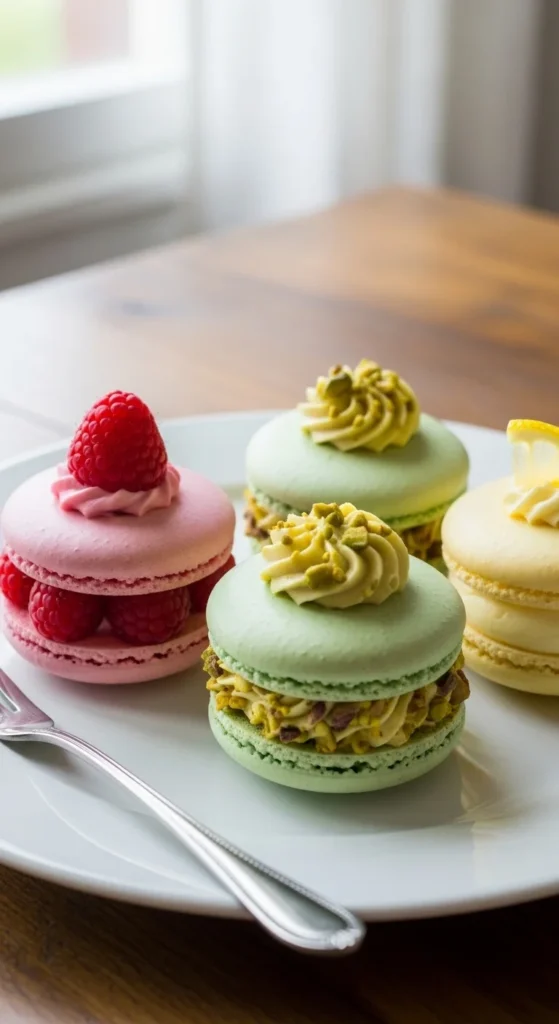
Serve these on a cute plate or tiered tray, ideally with tea or coffee. They’re perfect for impressing guests, celebrating small wins, or sneaking a sweet indulgence mid-afternoon.
Store in an airtight container in the fridge for up to 3 days, but honestly… you’ll eat them faster.
Nutrition Facts
A reminder: these are treats, not health food.
- Calories: Moderate for dessert, worth it
- Protein: Small, from almond flour and egg whites
- Fat: Butter-forward (yep, delicious)
- Carbs: Sweet but balanced
- Sugar: Present and unapologetic
- Fiber: Tiny bonus from almond flour
Common Mistakes to Avoid
- Overmixing batter – tough shells are a tragedy.
- Skipping rest time – no skin = cracked, sad macarons.
- Under/overbaking – chewy middles are great, burnt edges are not.
- Not sifting ingredients – lumpy batter = lumpy cookies.
- Filling too hot or too cold – buttercream fights macarons. Temp matters.
Alternatives & Substitutions
- Almond flour substitute? Cashew or hazelnut flour works but slightly changes flavor.
- Buttercream flavor swap: Add cocoa, coffee, or fruit puree. Go wild.
- Egg whites: Pasteurized or fresh, both are fine.
- Milk/cream: Any non-dairy milk works if needed.
Final Thoughts
French buttercream macarons are fancy but approachable. They prove that you can make delicate, beautiful desserts at home without losing your mind.
Take your time, enjoy the process, and remember: imperfections are part of the charm. Now go impress someone—or yourself—with these colorful little clouds of joy. You deserve it.
FAQ (Frequently Asked Questions)
Do I need a stand mixer?
Not strictly. Hand mixers work fine, but a stand mixer makes life easier.
Can I color my macarons?
Yes! Gel food coloring works best. Liquid can affect texture.
Why are my shells cracking?
Likely skipped the resting period or overmixed. Both are classic mistakes.
Can I make them ahead of time?
Yes. Store assembled macarons in the fridge up to 3 days. Let them come to room temp before serving.
Why are my macarons hollow?
Overmixed batter or oven too hot. Classic learning curve moment.
Can I freeze macarons?
Yes. Freeze unfilled shells for up to a month. Fill after thawing.
Is French buttercream very sweet?
Less sweet than American buttercream, but still a dessert, so don’t overthink it.